
爱情公寓2German exports to China fall over 12% in H1 as industrial upgrading reshapes trade structure; cooperation remains vital: expert_我的网站
A | 长山尾,黄渤海交界处。 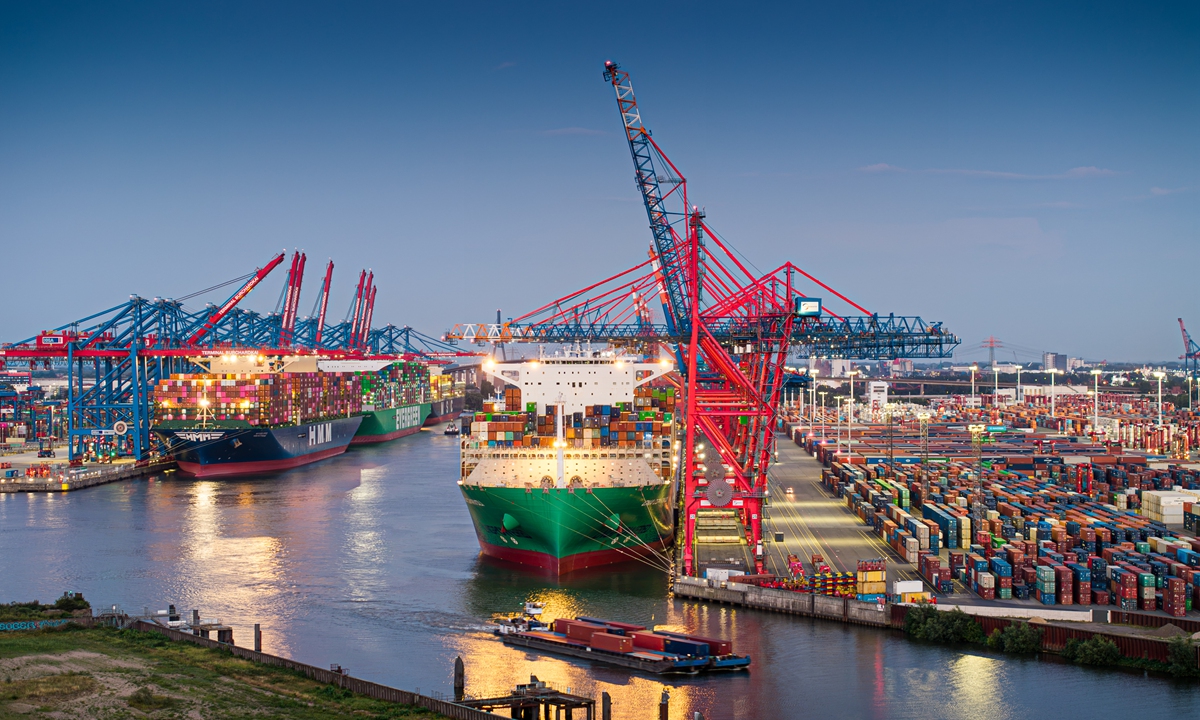 German exports to China fell year-on-year in the first half of 2026, pointing to a deeper restructuring of bilateral trade as China moves up the manufacturing value chain, Chinese analysts said. They also cautioned that the decline should not be read as diminishing China's importance to German businesses, given the deep economic ties and the continued benefits of cooperation for both sides. Germany's first-half exports to China fell by more than 12 percent year-on-year to just under 37 billion euros ($43 billion), while imports from China rose 8.9 percent to 91.8 billion euros, according to data from Germany Trade & Invest (GTAI) cited by Reuters on Sunday. Germany's trade deficit with China widened to about 55 billion euros from 40 billion euros a year earlier, the report said. Reuters cited Corinne Abele, GTAI's East Asia expert, as pointing to weaker domestic demand and the fact that German companies are increasingly producing inside China. Commerzbank economist Vincent Stamer said that China's diminishing reliance on Germany showed that the country is becoming more independent of Western powers and catching up technologically, according to Reuters. China has continued to strengthen its capabilities in sectors including new-energy vehicles, artificial intelligence and advanced manufacturing, enabling more products and technologies that previously depended on imports to be supplied domestically, Zhao Junjie, a senior research fellow at the Institute of European Studies at the Chinese Academy of Social Sciences, told the Global Times on Sunday. "This means the structure of China-Germany trade is changing," Zhao said, noting that as Chinese industries move up the value chain, China's reliance on some German industrial products is declining, while Chinese companies are becoming more competitive in sectors where German manufacturers traditionally enjoyed strong advantages. In a position paper released on July 28, China's Ministry of Commerce (MOFCOM) said that the rapid growth of China's modern industries is driven by innovation, with nationwide research and development (R&D) spending growing by an average of 10 percent annually during the 14th Five-Year Plan (2021-25) period. The changing trade trend is also linked to Germany's own industrial competitiveness and policy environment, Zhao said, noting that high energy costs, demographic pressures and slower investment in some emerging technologies have weighed on the country's industrial upgrading and innovation. At the same time, political and security considerations have increasingly shaped Germany's economic policy toward China, as Berlin has moved closer to the broader US and EU "de-risking" agenda, Zhao said. "Such policies can be a double-edged sword, raising costs for German companies in China and disrupting bilateral economic cooperation while seeking to pressure Chinese industries." However, it is notable that overall China-Germany trade remained substantial. Total bilateral trade exceeded 128 billion euros in the first half, about 3 billion euros more than Germany's trade with the US, according to Reuters. China overtook the US as Germany's top trading partner in 2025 after US President Donald Trump launched sweeping protectionist tariffs that weighed on German exports to the US. Falling German exports should not be seen as diminishing China's importance to German businesses, especially as bilateral ties are increasingly expanding beyond trade into investment, local production and R&D, analysts said. German companies invested more than 7 billion euros in China in the first 11 months of 2025, up 55.5 percent from 4.5 billion euros in 2024 and 2023 and hitting a four-year high. German companies are bulking up their China business and adopting "China for China" production strategies partly to reduce exposure to possible tariffs and export restrictions, according to Reuters. Major German companies are also deepening their presence in China. BASF's Verbund site in Zhanjiang, South China's Guangdong Province went fully operational in March with an investment of 8.7 billion euros, the largest single investment project wholly owned by a German enterprise in China, the Xinhua News Agency reported. "China and Germany have developed deeply intertwined economic interests over many years," Zhao said. Rather than treating stronger Chinese industries as a reason to reduce cooperation, Germany should adapt to a relationship in which competition increasingly coexists with investment, innovation and industrial collaboration, he noted. Recent high-level exchanges have also underscored the importance both sides attach to economic ties. During a meeting with German Economy Minister Katherina Reiche in May, Chinese Vice Premier He Lifeng said that China and Germany are important economic and trade partners with a solid foundation, enormous potential and strong complementarity, calling on both sides to consolidate cooperation in traditional sectors and tap opportunities in emerging fields, according to the Xinhua News Agency. Reiche said that the German business community remained confident about China's economic prospects and innovation capabilities and would continue to deepen cooperation, Xinhua reported. The two sides have also moved to strengthen institutional mechanisms. China and Germany agreed to restart the China-Germany Joint Economic Committee and establish two new working groups on trade and investment and industrial cooperation, according to the MOFCOM. 。徐渭明 摄影 长岛,如一串宝石项链,挂在山东半岛和辽东半岛之间的海面上。曾经的军事要塞为长岛蒙上了神秘色彩,传说的“海上仙山”为长岛增添了些许诗意。
B | 夏末去长岛,天气不燥,海鲜正好。 一乘上往长岛的船,便被翔集的海鸥包围。它们白羽黑梢,灰喙黄足,在碧空下划出自由的弧线,时而俯冲掠过浪尖,时而盘旋于船舷之侧,发出清越的鸣叫。抬头望去,鸥鸟与云影共舞,让人瞬间理解了何为“鸥波万里”。 徐渭明 摄影 到长岛,必须得看月牙湾。这里没有细绵黄沙,却有天然晶亮的卵石铺满千米海滩。这份海浪亿万年雕琢打磨的温润玲珑,可谓世间少见。
C | 阳光之下,彩石层层叠叠铺展蔓延,乳白似凝脂、浅红如玛瑙、苍青若翡翠,深浅纹理自然晕染,每一颗都独一无二。海潮漫涌时,清水浸润石面,瞬间通透莹润,斑斓色彩尽数绽放,似散落海岸的细碎宝石。潮水退去,卵石洁净清亮,圆润无棱,藏着山海温柔的肌理。
D | 月牙湾的彩石,藏着长岛最纯粹的山海诗意,不事雕琢,却以浑然天成装点长岛独一份的浪漫与清灵。 徐渭明 摄影 长岛的风光,既有月牙湾彩石般的灵秀,也有黑山岛般的质朴,更有自带地质力量的雄奇。 从南长山岛的码头乘船,可以去黑山岛。黑山岛少了南北长山那般花哨热闹,却有着北方海岛的拙朴生气。岛上的村落依坡而建,石屋错落,小巷幽静,时光仿佛在此放慢了流速。石板路,黄石墙,海草房,咸风吹来的炊烟,老渔民望海发愣的神情,速写似的勾勒出海岛生活的本真。 渤海一号灯塔。徐渭明 摄影 黑山岛北端的龙爪山,则张扬着时光雕琢的苍劲。这里岸线险峻,石英岩海蚀崖似刀削斧劈,纹理清晰。
E | 五座临海绝壁并肩联结,向蓝绿的海面铺出层层高峻的石“浪”——海浪拍断崖,山海逐浪高。地质力量与苍茫时光的磨合,漫长缠绵,在长山列岛留下了许多奇崛。 长岛最有内涵的景致,当推“黄渤海分界”奇观。
F | 南长山岛南端,有一条向海面延伸出的狭长沙石滩,被称为长山尾。长山尾东侧,是黄海,盐度高、含沙少;西侧是渤海,黄河入海带进泥沙和淡水,海水盐度低。两海水体在此交汇,由于水文、温度与盐度的差异,色差分明。因而站在长山尾,有“左脚踏黄海、右脚入渤海”之说,让人顿生“一览沧溟小”的豪情。 徐渭明 摄影 其实,地理学上的黄渤海分界,取的是辽东半岛老铁山角到胶东半岛蓬莱角的连线,长山尾只是正好骑在分界线上。 到了长山,还得看一次灯塔夕阳,等一回海天彩霞。而我,恰好邂逅了一场浩大绚丽的夕色霞光。
G | 地点,当然在九丈崖。 徐渭明 摄影 那天,海风和畅,云开霞披。
H | 当夕阳落到海平面上,整片海空顿成熔化的金箔。
I | 近前的“渤海1号”灯塔,被镀上一层暖橘色的柔光,素白的塔身与红色的塔顶在余晖中相映成趣。海面上,归船剪影点点,沿着那道耀眼的金色波光缓缓靠拢过来。 夕阳西沉,整个渤海仿佛被点燃,天幕从绛紫、玫红一层层烧到橘金与明黄,晚云绸缎般铺展,又被晚风撕成流火的纹路。近海养殖筏架整齐的弧线浮在金红色的水面上,像上苍在大海上悄悄写下的诗行。
J | 徐渭明 摄影 霞云渐隐,塔灯亮起,旋转的清光穿透渐暗的天色,与天边渐显的弦月彼此呼应。
K | 长岛开始从绚烂回归本色、回归沉静。这样的时刻,长岛的美便不再只有地质奇观或海天一色,有渔家烟火的温度,有灯塔恒久的守望,还有天地以盛大色彩昭示的壮阔情怀。返回,查看更多。 Current article:http://nalk.cuancuguanzhongnieqinyazhun.cyou/news/20260826_471.html Published on:21:51:34 |


